
The stanza
Meaningful delight
When the user has internalized every type of motivator
Now that we're near to the end of this report, I want to draw attention to this: you can apply gamification to almost all of the matrix zones to great success as long as you understand where your users are coming from and what your app promises to do. The only zones I'd avoid are the Burdens and Shams, as these are the ones that only introduce meaningless friction at best, and downright lying to the user at worst.
What I call Stanza is not necessarily the goal of gamification; this zone isn't the perfect one, but the one where the user's introjected motivation is at least somewhat dependent on an expectation of progress, and an expectation of value. This is the zone where, usually, designers have to put most work in at all levels: visual design, copy, value proposition, and progression system.
How We Feel
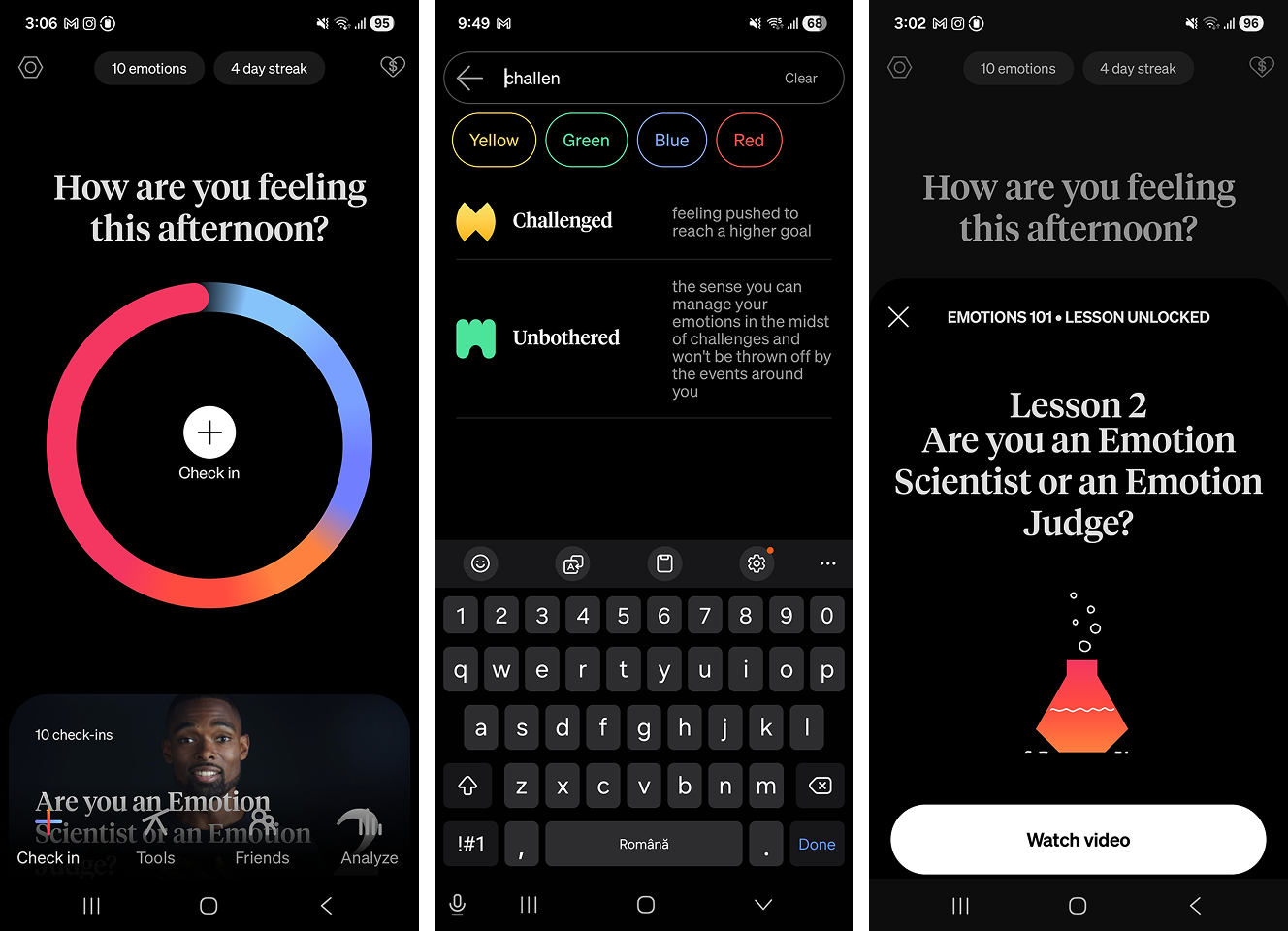
How We Feel is the best wellness digital product I used. Its elegant UI is a great selling point for the "game" the user is expected to engage in: finding and correctly naming their emotions. In time, users become better at recognizing their feelings, and How We Feel rewards them with video lessons and various coping strategies. The value comes as a promise of better relationships and a more elevated understanding of emotions: no feeling is "good" or "bad"; it's in attaching a moral value to a transient feeling where we get stuck ruminating and controlled. Introjected motivations happen at a suggestive level; people want to become better at managing their emotions because they don't want to be seen as weak, or because they would like to maximize pleasure, or look more grounded in the eyes of a partner.
Consider any game mechanic you plan to implement in the user's context. When nobody is watching them, what's the game users play with your product?
Every check-in feels like a discovery session, and a small challenge if one decides to use the search bar instead of the main selection screen, stimulating the intrinsic desire to know one's self better. Progress is recorded in a streak system that makes sense in the context of the user; everyone feels emotions every day. The extrinsic incentive for recording emotions daily comes in the form of a weekly summary. It's useful to see a week's worth of major feelings at a glance.
Where the system breaks is at the reward schedule design. If the informational videos are the reward, I think How We Feel makes a mistake in delivering them once every few emotions, instead of once every few successful days.
Revolut
A more pragmatic example is Revolut's customizable homepage. I want to see a month's expense breakdowns and compare it to previous months because I want to feel in control of my expenses. To me, the customization of widgets is helpful from an extrinsic sense, where I can keep an eye on the most pressing financial matters, but it also becomes a game of optimizing the homepage into my personal wallet. Would I consider adding more customization options? Sure.
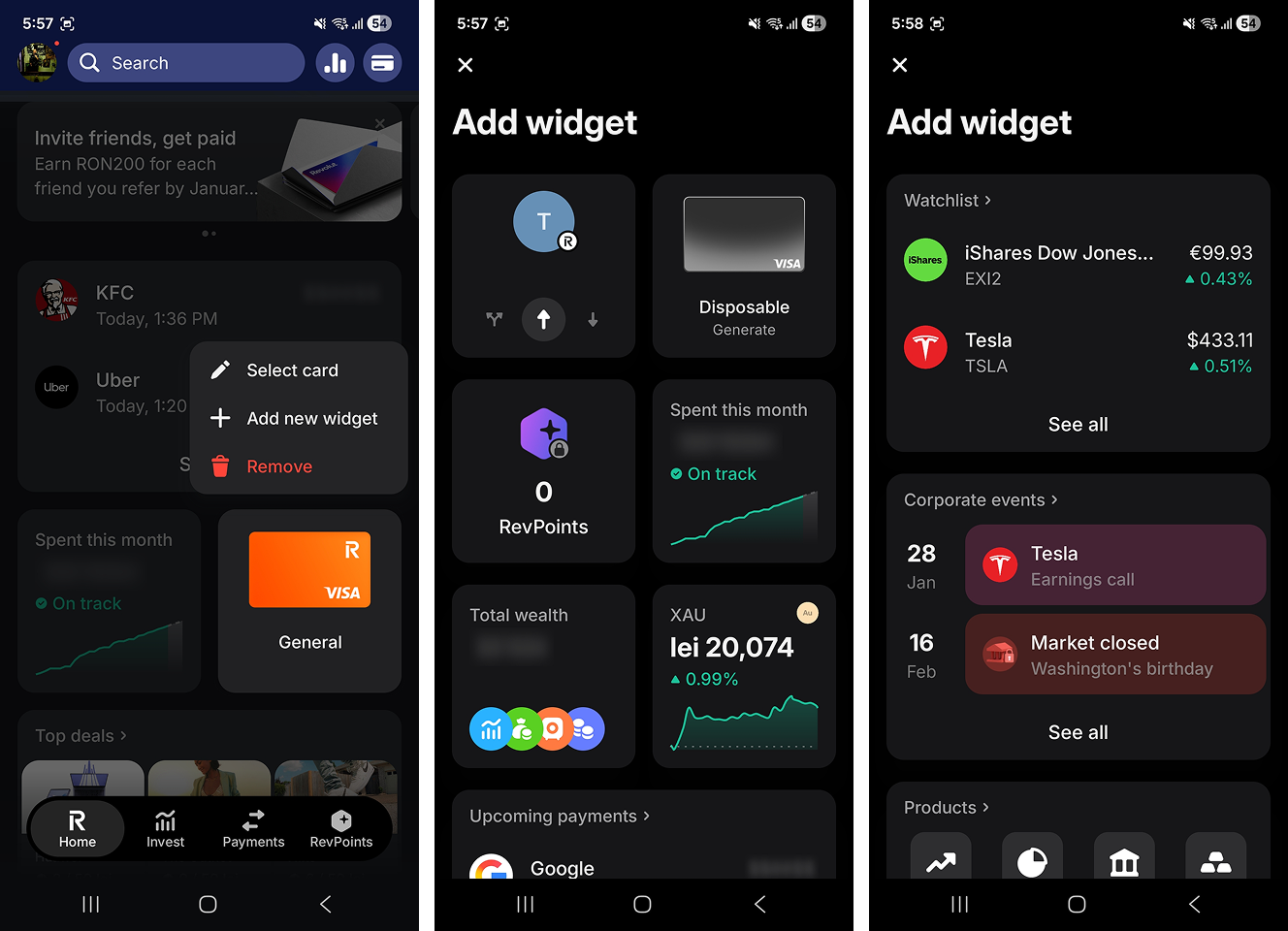
Why is this specific thing an example of gamification? The feeling of "owning" something is not the emotional pay-off, but an application of the IKEA effect. The game doesn't come from switching a bunch of widgets around, but from actively setting up the parameters of the widgets. An expense widget doesn't make sense if I don't set up budgets, a watchlist doesn't make sense if I don't invest, cards don't make sense if I don't activate at least one. The IKEA effect works on the homepage, but true ownership can become a game: how good can I become at PFM?
Insight
Ensure that customization goes beyond shallow cosmetics.
If everything is set up correctly, I only need to look at my Revolut account to know if I'm making progress or not. The homepage isn't mere a digital wallet that looks nice, but my own leaderboard.