
The kite
Intrinsic + progress
When progress is expected, and sometimes, required
Users with enough intrinsic motivation to pursue a difficult objective aren't just interested in one-time accomplishments, but looking to measure themselves against bigger challenges. Progress helps with flow state; a psychological concept that describes an enmeshment with one's work, where the task isn't difficult enough to cause anxiety, but the right amount of "challenging" to avoid boredom.
If the designer assessed the user's motivation correctly, what's left is to design a course of action that informs of progress accordingly.
Duolingo
It should be no surprise that we're talking about Duolingo. Whether you believe it's a good way to learn a new language, it is a good way to keep yourself engaged in the learning of a language until you find a richer resource. The app nudges the user towards doing a good job in the 2-3 minute lessons with playful visuals.
Duolingo high-fives users for nailing 5 answers in a row, 10 answers in a row, doing a perfect lesson, doing a lesson in a timely manner, increasing the language score, and earning Legendary on a specific lesson. On paper, these are just pixels, but users with enough motivation to work through the lessons feel gratified because the feedback feels genuine; good answers feel like progress.
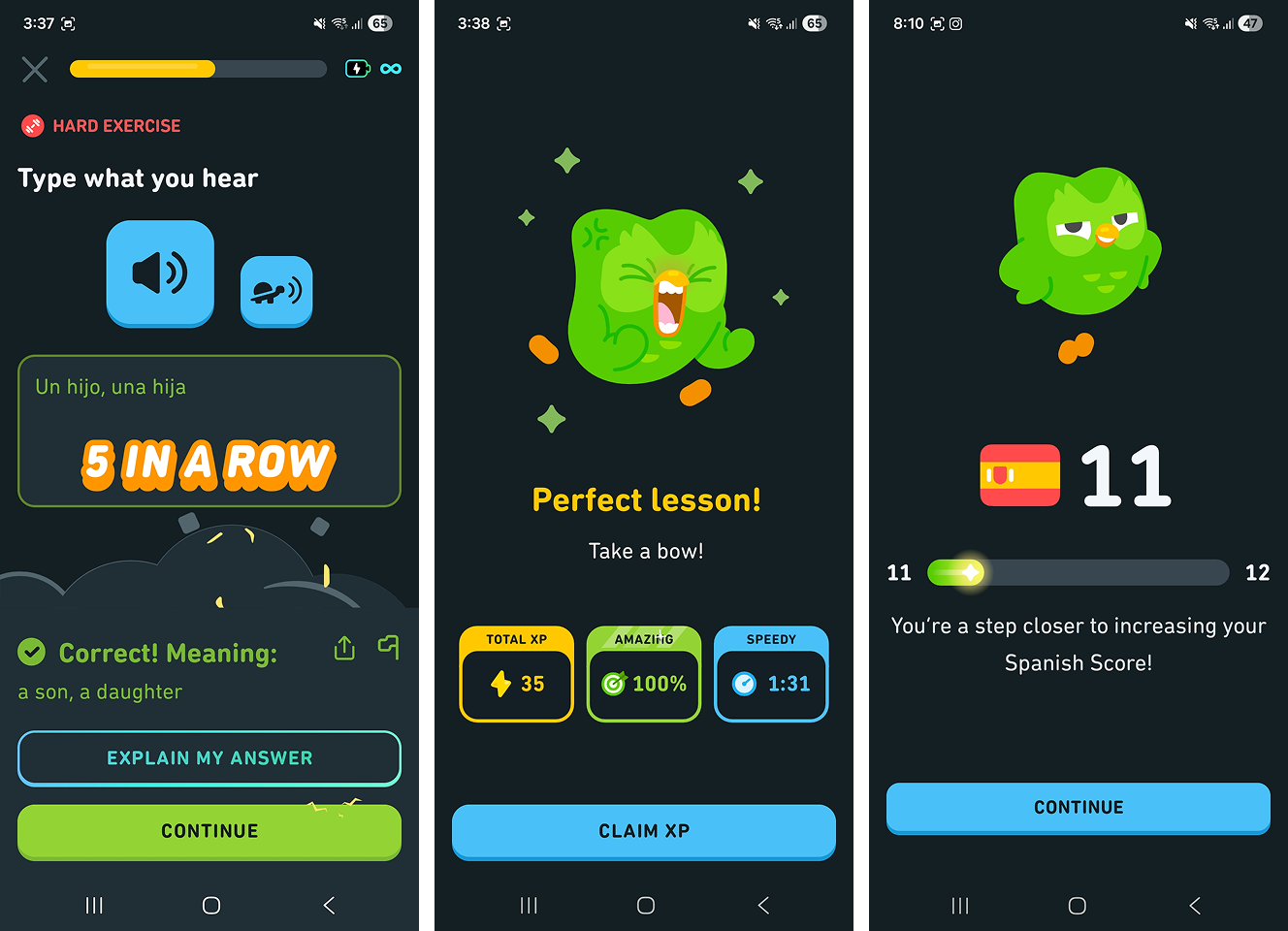
A compounding effect is that well-placed high-fives encourage engagement in another game, a more challenging one: landing perfect scores and getting the Speedy lesson badge. These are factors that Duolingo's designers can measure, and reward appropriately with badges that keep a tally of the player's achievements.
Insight
You can make a game out of everything, as long as it's measurable.
There's a thin line between congratulating the user for every baby step and genuine feedback on progress. This approach requires testing to notice when the user crosses from "engaged" into "patronized."
Dimensional
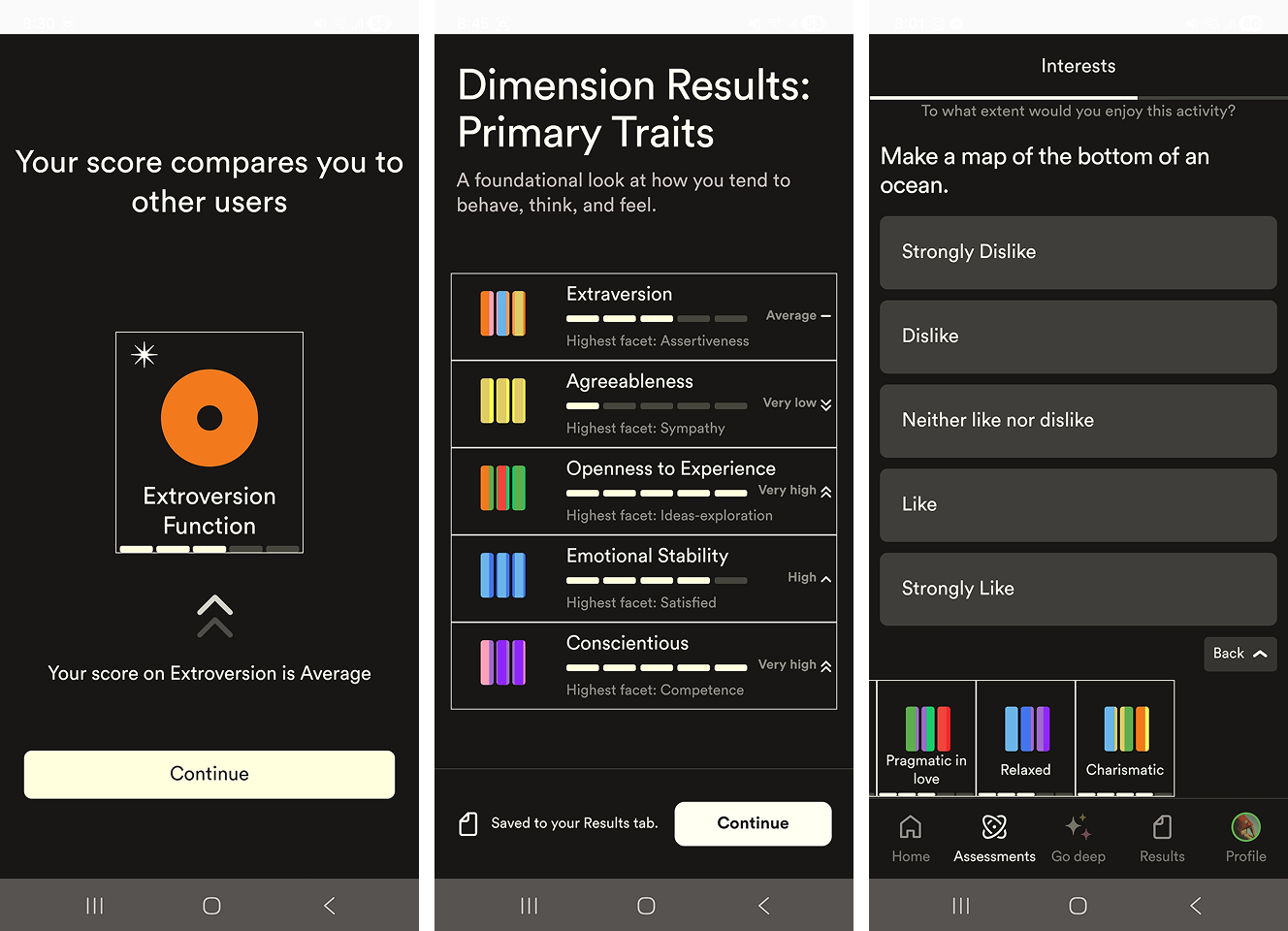
People download Dimensional because self-assessment is a fun past time, and young users have an intrinsic desire to understand themselves and how they relate to the world around them. Dimensional collects survey questions from popular personality quizzes like MBTI and transforms commonalities into traits; gamifying clusters of human characteristics into badges the user can monitor over time.
What makes these (arguably repetitive and inconsequential) quiz questions interesting is Dimensional's approach to keeping track of progress. The traits show up below the questions, in real-time, as the user uncovers more about themselves. Whether this is genuine psychological assessment or a funny nickname is unimportant; progress towards learning more about one's self is displayed in an engaging manner.
Insight
Keep gamification mechanics as simple as possible.
An arguably bad of way of handling this would be to high-five the user after 2 or 3 answers with "You're an Extrovert!", only to backpedal later, after the user intentionally assesses themselves differently. The metric tracked is frequency of answer types (I think) which the user can deliberately tweak to gain a specific pay-off. (Being told they're an Introvert, in this case.) Well-designed gamification can encourage authentic responses. Poorly designed gamification can foster inauthenticity.