
The badge
Introjection
When the product is used as an extension of the social mask
I was a bit poetic there, but introjection refers to that place where an external reward hasn't been 100% integrated within the perception of self-determination. Introjection lacks ownership, as the primary driver is a combination of ego, self-esteem, and social prestige. It's difficult to measure this in a user, so, for the sake of simplicity, I'll refer to the attitude of someone who's using a digital product from a place of introjection as "maturity."
At this stage of motivation, the user understands an implicit need for doing an activity. The gamification should be directed towards an internalized feeling of maturity, and shy away from gambling-like visual elements or, Talos preserve us, confetti.
Strava
Fitness products are a good use case for gamification in this motivation zone because people know they should be physically active. Strava does this correctly with comparatively subdued success screens, but the star of the show, in my opinion, is the Challenges screen.
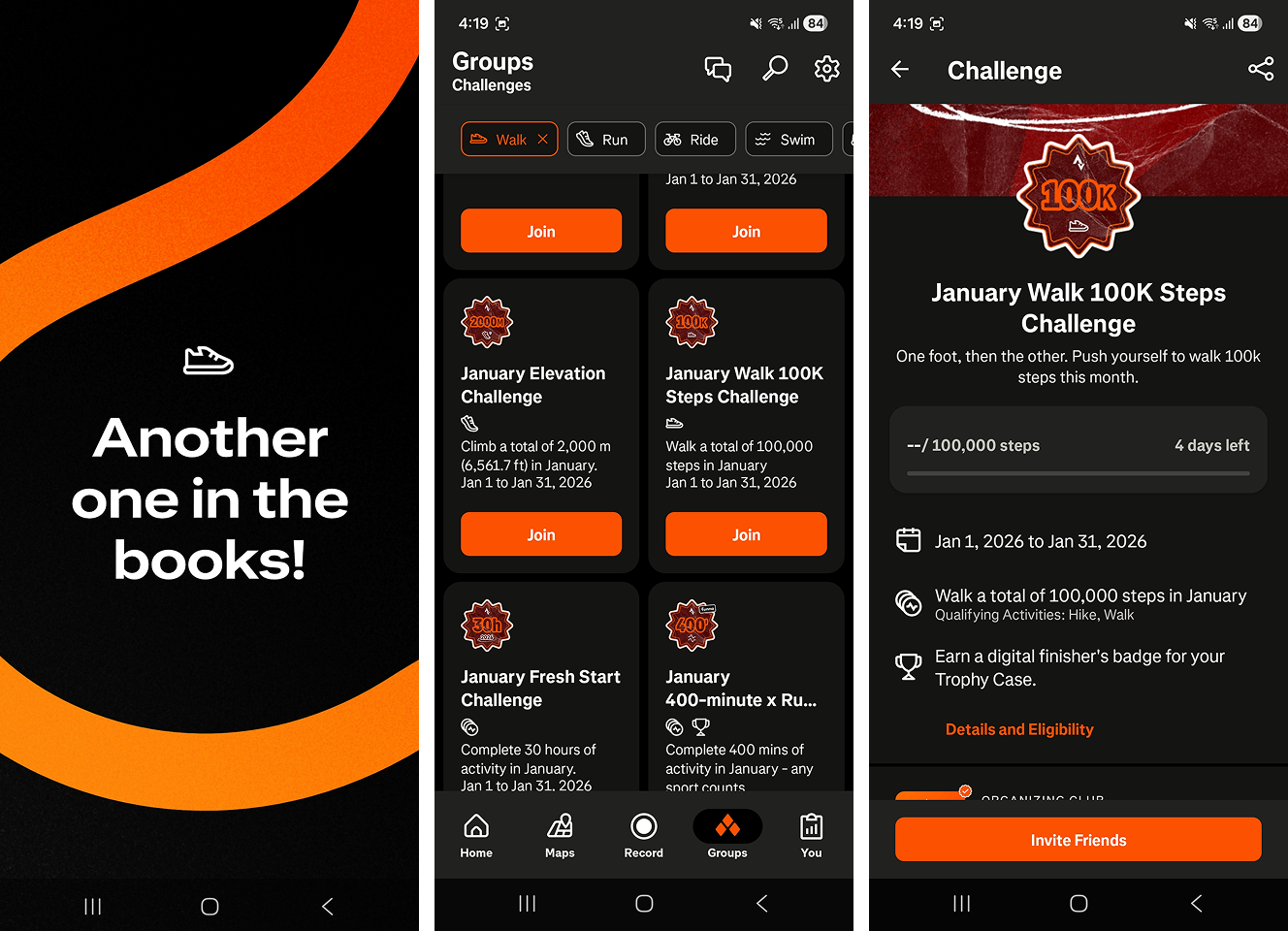
Users can choose one or more challenges to participate in, to keep up with their peers or engage in a more meaningful form of async competition. Strava can measure progress directly, which means users can be congratulated for the things they're doing, not for the actions they may or may not take in their spare time.
This is where badges come into the conversation, because as skimpy and meaningless a pixelated icon can be, it's not functioning as a virtual pat on the back, but as a reminder of an genuine accomplishment. Completing a marathon is an adult's accomplishment.
Todoist
Another interesting (and frankly, unexpected) example was Todoist. I don't have a great opinion of bloating what's meant to be a list with a myriad of curious features, but Todoist worked to transform an empty state into an achievement that signals maturity. Upon completing a day's todo list, users are prompted to share their achievement.
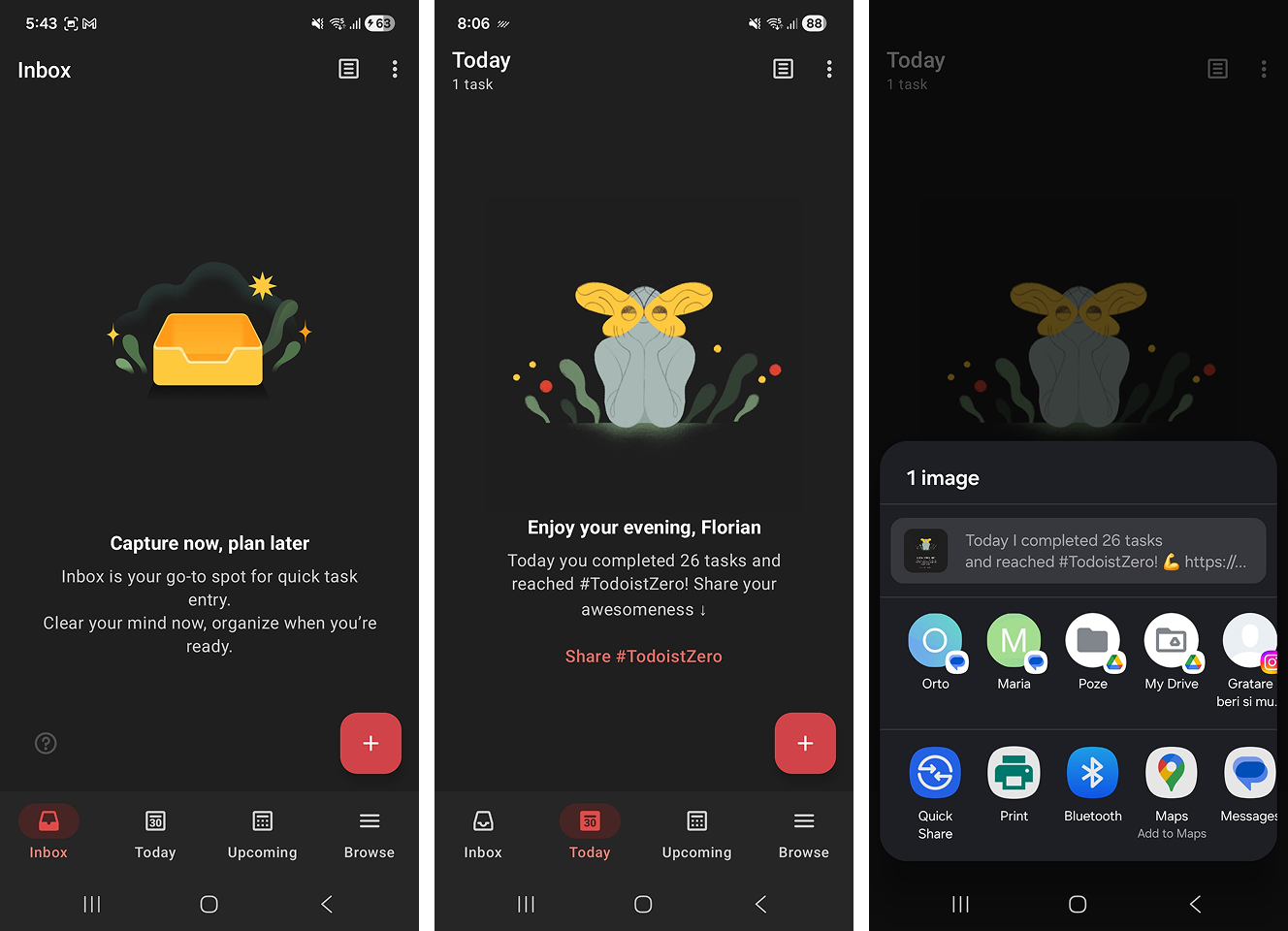
This juxtaposition of artwork, motion design, and copy works on several levels:
- the copy addresses the common, internalized pressure of not being able to relax until all chores have been sliced off the titular todo list (a common "adult" experience, unfortunately).
- the beautifully animated illustration invokes a sense of calm; a gentle ambiance that draws users in.
- the act of sharing to a social space might seem odd to cynics, but if users are a part of a group that has the same attitude towards productivity, the post can turn into a pro-social nudge.
- the counter makes the achievement believable.
Insight
Copy and illustrations can create the emotional pay-off of regular video games.
Obviously, context matters. I racked up 26 finished tasks because I copied a grocery list template and checked off a "task" for every little thing I bought. I'll let you be the judge of what this means for regular Todoist users.