
The burden
Intrinsic motivation
When users are already motivated (and gamification becomes clutter)
Intrinsic motivation is desiring to do an activity because it's subjectively compelling. Even if the digital product facilitates an aspect of that activity, people will be more interested in the activity than in the product. The problem of introducing game mechanics in this zone is their potential of "stealing the show" and becoming an obnoxious distraction.
Fable
Fable's appeal lies in its social features, but forming communities around niche books and TV shows is not a game mechanic. Daily self-assessment of reading is used as a mechanic because it promises social belonging among the "elite" of book readers on the platform. The "Did you read today?" prompt greets returning users, who are looking for anything other than boosting an artificial streak.
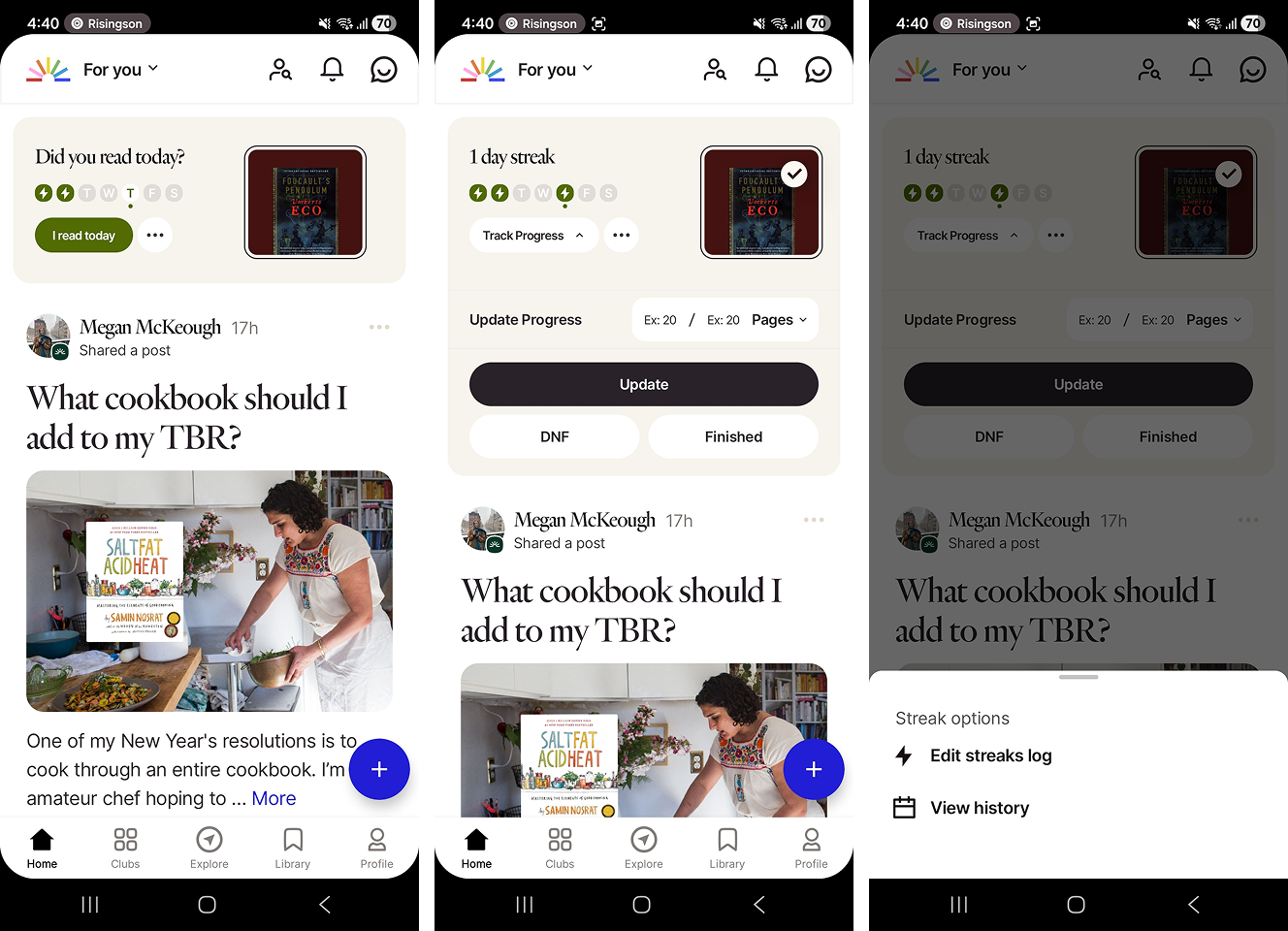
I'd wager that users who read regularly don't need to read daily; volume isn't dictated by regular, 24-hour increments. Someone can read a lot in a couple of days, take a week-long break, and have had read more pages than someone who imposes a 10-page daily reading goal. The streak implies a "need" to read daily, which isn't a requirement, and editing the streak makes the activity of logging futile because readers don't get an emotional pay-off by lying to the app.
The problem is context-related. Fable can't detect if the user read, and the user doesn't have to "inform" Fable of their reading habits; reading is something you do because you want to, not to let Fable know.
There's no specific achievement or penalty (and could never be one) related to keeping a daily reading streak, other than patting yourself on the back for coloring all lightning icons green. Editing streaks adds unwanted friction: if you missed a day and want to keep the streak up, you'll have to do it manually.
Insight
You should never gamify and reward what you can't measure.
It's important for designers to assess correctly the user's goal. There's little a designer can do to stimulate a highly motivated person, resulting in game-inspired exploitation that feels like a burden.
TripAdvisor
Cashback can become a game mechanic if there are enough emotional levers the designers leave hanging around for the user to connect into a meaningful game.
During winter, I planned on using TripAdvisor to browse activities for a trip to Poland. I used the app before, but I had no idea about their loyalty program because, truth be told, my travel career started late. I'm a late travel bloomer.
That $30 welcome offer on the homepage is for US users, which I'm not, but the app isn't cognizant of it, or better yet, doesn't care. The point is to encourage me to read about their other offers, which detail 5% cashback on activities and hotels booked through TripAdvisor.
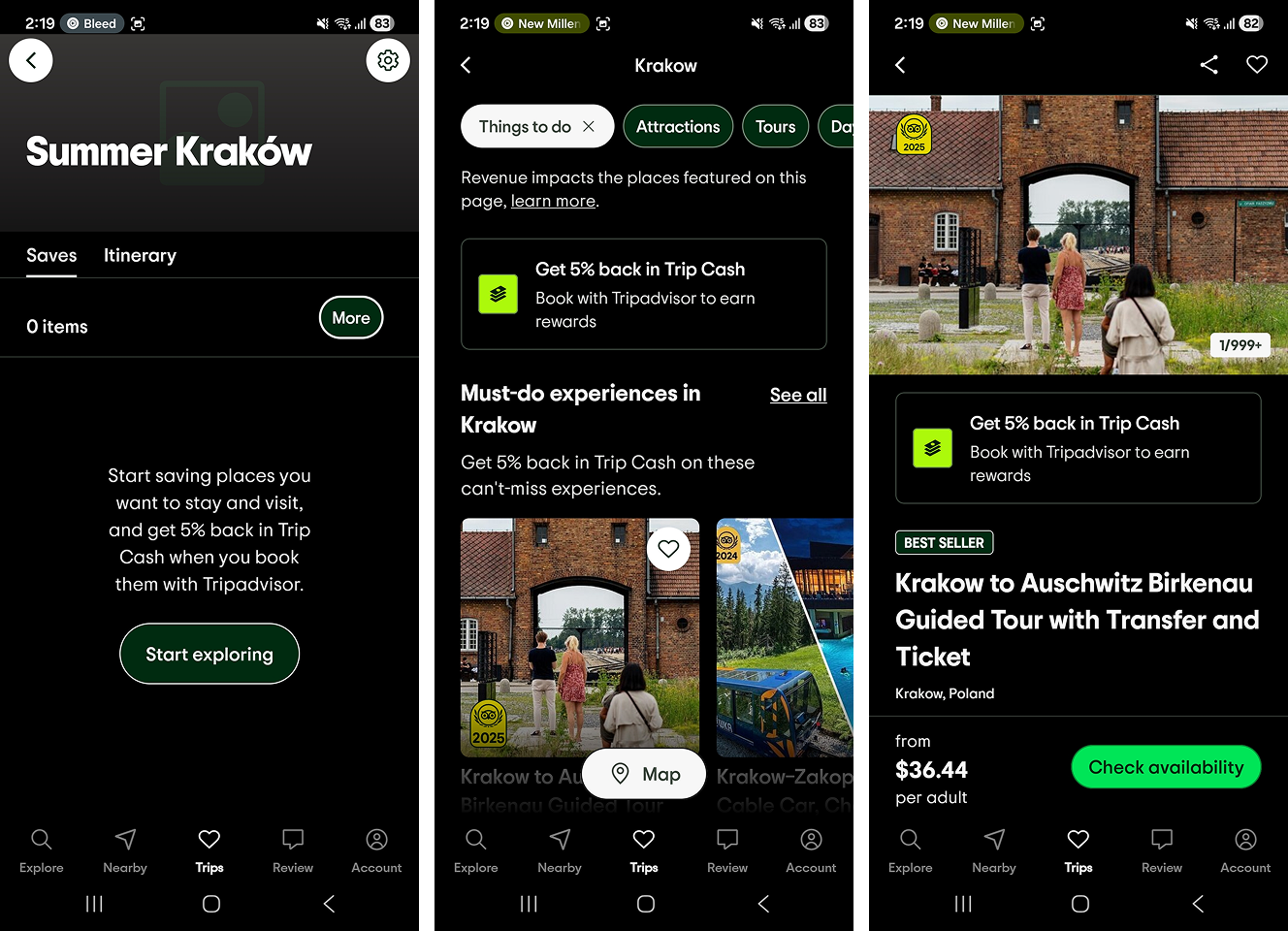
Okay, that's nice. Five minutes into my trip planning, and the cashback offer is plastered on every pixel of the screen. It's in the empty states, in inline banners, even as helper text where more useful information should be. I stopped thinking about the trip I wanted to take, and became a machine that translated everything into potential cashback earnings. Note that, at that point, I haven't booked anything. I haven't even bookmarked more than two or three activities, but my cognition is loaded with cashback, and my desire to keep planning on TripAdvisor is replaced by a compulsion to google "best ways to earn cashback on TripAdvisor". Gaming the system for extrinsic rewards overrode my intrinsic desire to, you know, travel the world.
Insight
Extrinsic rewards can displace intrinsic motivation. With gamification, you should only reward what the user wants to do, and time it when they accomplish their goal, not entice them towards abandoning their goal to attain the reward.
If you're gamifying too much something the user wants to do, you risk diluting the inherent motivation, flooding the app with inauthentic users, and turning invested users into bare-minimum performers, interested in grinding enough points and stats for an artificial reward.