
The trophy
Extrinsic
When the reward is the only thing that matters
Remember that extrinsic motivation is not only about external rewards, but also about compliance and social pressure.
Revolut
I get regular push notifications from Revolut, congratulating me for being in the top 5% of active users on the app. But I have never considered getting into Revolut Premium until after I activated the RevPoints program. All of a sudden, that bundle of temptations, consisting of a VPN subscription, Perplexity, some meditation app, and, wouldn't you know, Tinder, looked awfully pretty.
The thing with Revolut is that I already use it daily out of necessity. I use it as an all-encompassing secondary bank account linked to Google Pay because of the budgeting features. 99% of all my transactions are done in the local currency, meaning that Premium is unhelpful unless I become a digital nomad, like, tomorrow. The subscriptions are usually what catches the eye of average users.
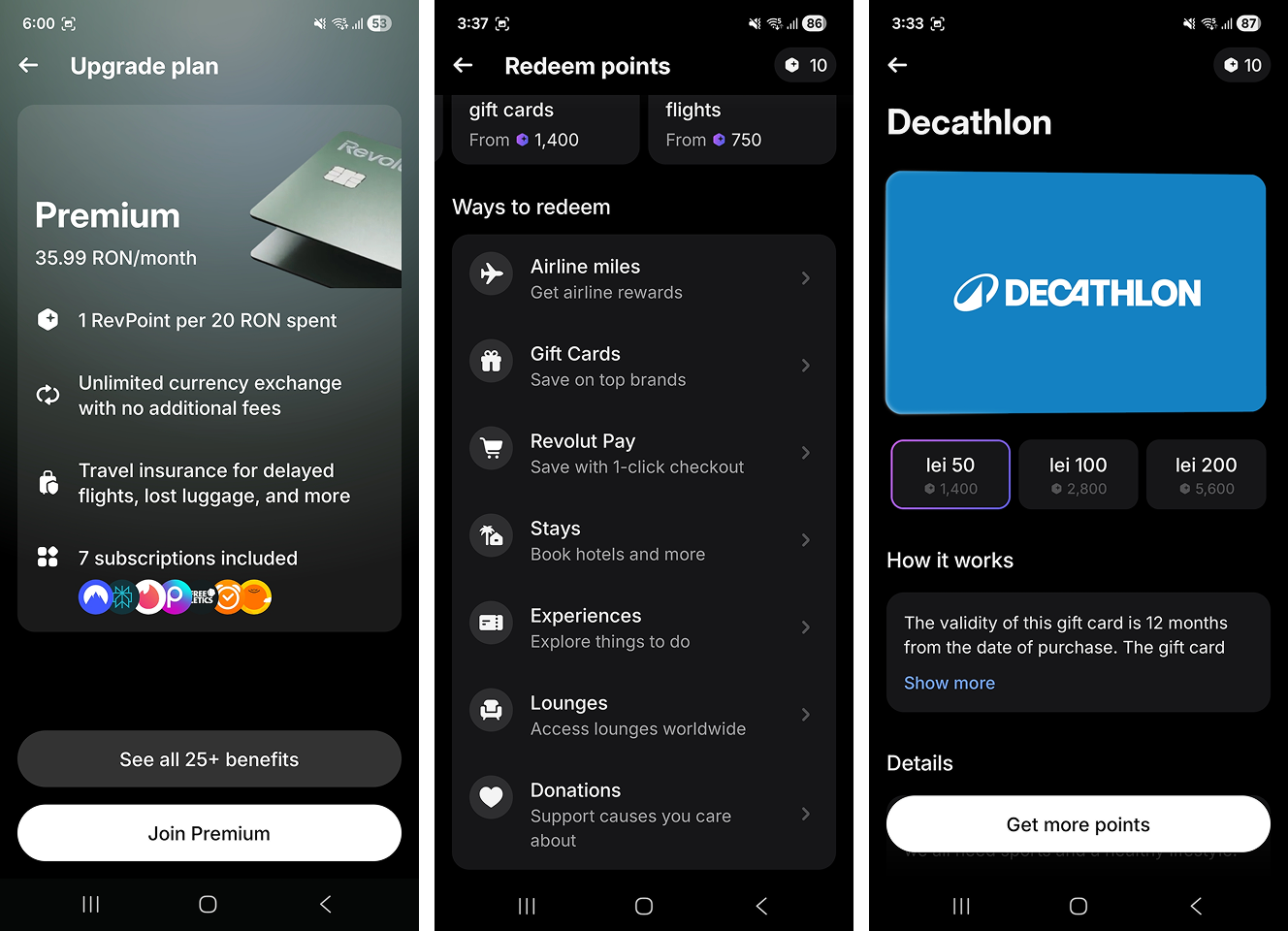
RevPoints are a faux-cashback program, clothed in a loyalty program, dolled up to look like a collectathon. You get points for a certain amount spent through Revolut; the higher your subscription, the less required to spend to get more points. With them, you can buy airline miles, gift cards, hotel stays, and make donations. A few observations here:
- Revolut is transparent with how many points you get for each transaction.
- the system seems well-balanced; I was relieved seeing deducted points after a refund.
- reward costs are high enough to discourage you from collecting points on Standard plans.
- the program seems to be designed with a specific user in mind: well-paid corporate workers who travel often and use a variety of currencies.
- there is flexibility for less "ideal" users. Revolut has partnerships with apps like Uber and shops like... like Temu, of all things, meaning you get more points per buck spent if you shop there in a specific time frame. Besides that, there are in-app challenges, benefits for using Revolut Pay, and, like any self-respecting virtual currency system, the ability to buy points with hard cash at a rate that's like 40% off your normal spending.
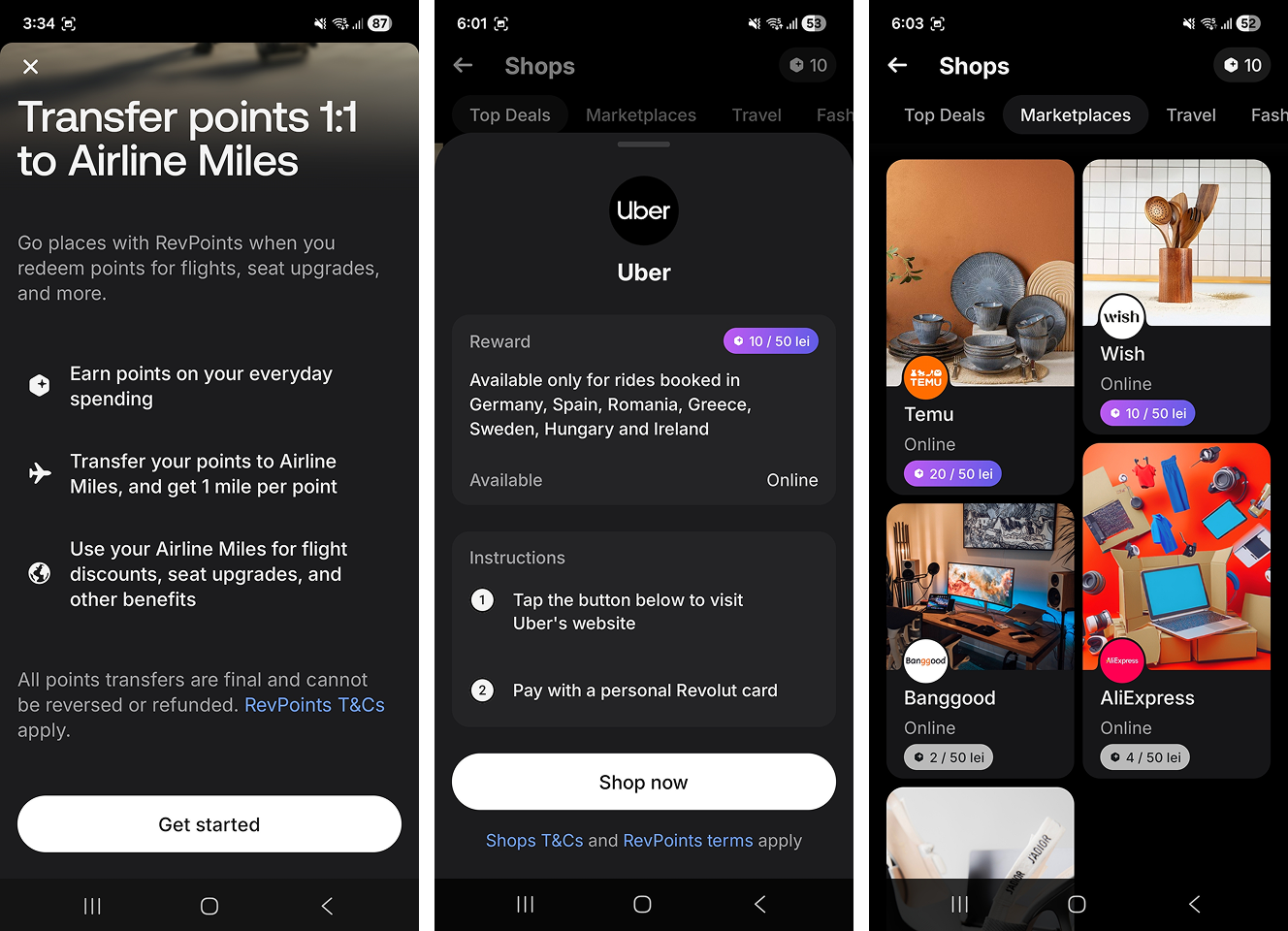
When I say that the cost for things you buy with points is high, I mean it. Gift cards from local shops are atrocious; sitting at 1,400 points (the equivalent of 5000 EUR in Standard spending), it's not even an option worth considering. Most other options aren't better. Unless you find a way to grind spending and optimize your daily shopping with Revolut's partners, it's impossible to accumulate enough points for a meaningful purchase. Points last for 3 years, but... is the feature going to last that long?
Insight
When you design reward schedules, you know you've done it well if users can feasibly calculate what every choice costs in time and money.
Skyrim, in particular, has a problem where it's impossible to calculate Magicka costs for spells that go higher than Adept, which means that you can't plan a mage build that doesn't revolve around getting as much Magicka as possible, limiting your roleplaying options. Tangent aside, cost transparency is the only thing that matters in a system where users are tied to your product purely out of a desire to earn rewards. Points aren't a great way to earn rewards, but because they're tied to something a user does on a regular basis, spending with points starts to feel like free money, doesn't it?
The problem with thinking like that is the natural incentive of becoming enamored with collecting as many points as possible. To put it the way a not-that-obviously-written-with-AI article on Medium put it: "Once I understood how RevPoints actually work, I started looking for ways to earn them faster and redeem them smarter... First, the biggest hack is upgrading to a higher-tier plan."
I mean, sure. A "hack" is to spend money to get more virtual currency. But it's sound advice if you want to maximize your points earnings.
A danger to designing programs like this in fintech is the implicit understanding that some people will truly, unequivocally, not get it, and will get burnt in the process. How many people understand Spare Change, for example?
The more options for spending and earning points you cram, the more appealing the program is for non-ideal users, and the higher the danger of people messing up.